Keynote Speakers

Carmen G. Almudéver
Toward Large-Scale Fault-Tolerant Quantum Computers:
Security in the Quantum Era
Current quantum computers already integrate tens to hundreds of qubits and have demonstrated the ability to solve certain tasks that are intractable even for the most powerful classical supercomputers. However, their high error rates still prevent them from performing reliable computations with practical impact. Overcoming this limitation requires transitioning from the current Noisy Intermediate-Scale Quantum (NISQ) era to the Fault-Tolerant Application-Scale Quantum (FASQ) era, where integrating quantum error correction becomes essential. In recent years, several experimental demonstrations have shown error suppression through quantum error correction techniques, and the first large-scale fault-tolerant quantum computers are expected to emerge by the end of this decade. Such systems could provide the computational power required to solve real-world problems, but also pose significant challenges to modern cybersecurity and cryptographic infrastructures.
In this talk, after introducing the principles of quantum computing and recent advances in the field, we will focus on large-scale fault-tolerant quantum computing architectures, with particular emphasis on integrating quantum error correction for reliable computation. We will then discuss the concept of quantum-safe security, which aims to protect digital systems against future attacks enabled by large-scale quantum computers.
Speaker Bio
Carmen G. Almudever received the P.hD. degree in Electronic Engineering from the Universitat Politècnica de Catalunya (UPC BarcelonaTech), Barcelona, Spain, in 2014. From 2014 to beginning 2021, she was an Assistant Professor at the Quantum and Computer Engineering Department and group leader of the Quantum Computing division of QuTech at Delft University of Technology, where she worked on the definition and implementation of scalable quantum computer architectures. In February 2021, she joined Universitat Politècnica de València, where she is currently an Associate Professor. She has (co-)authored more than 90 peer-reviewed technical publications. Her research focuses on different aspects fullstack quantum computing systems including quantum compilers, quantum error correction, fault-tolerant quantum computation, quantum machine learning and design and optimization of large-scale fault-torelant modular quantum computers. Dr. Almudever serves as an Associate Editor for the ACM Transactions on Quantum Computing and the Quantum Machine Intelligence journal. She served as the Technical Program Co-chair of the Computing Frontiers Conference 2021 and the Program co-chair for the Quantum Systems Software track at QCE22 and for the Design Automation for Quantum Computing track at DATE25. She was a co-recipent of several awards that include the 2017 MICRO Best paper Award, three HiPEAC awards (2017, 2023) and the Intel Doctoral Student Honor Programme Award (2012). She received a Beatriz Galindo Grant from the Spanish Ministry of Universities in 2020. She is the coordinator of an EiC Pathfinder Open project on scalable multi-core quantum computing architectures.
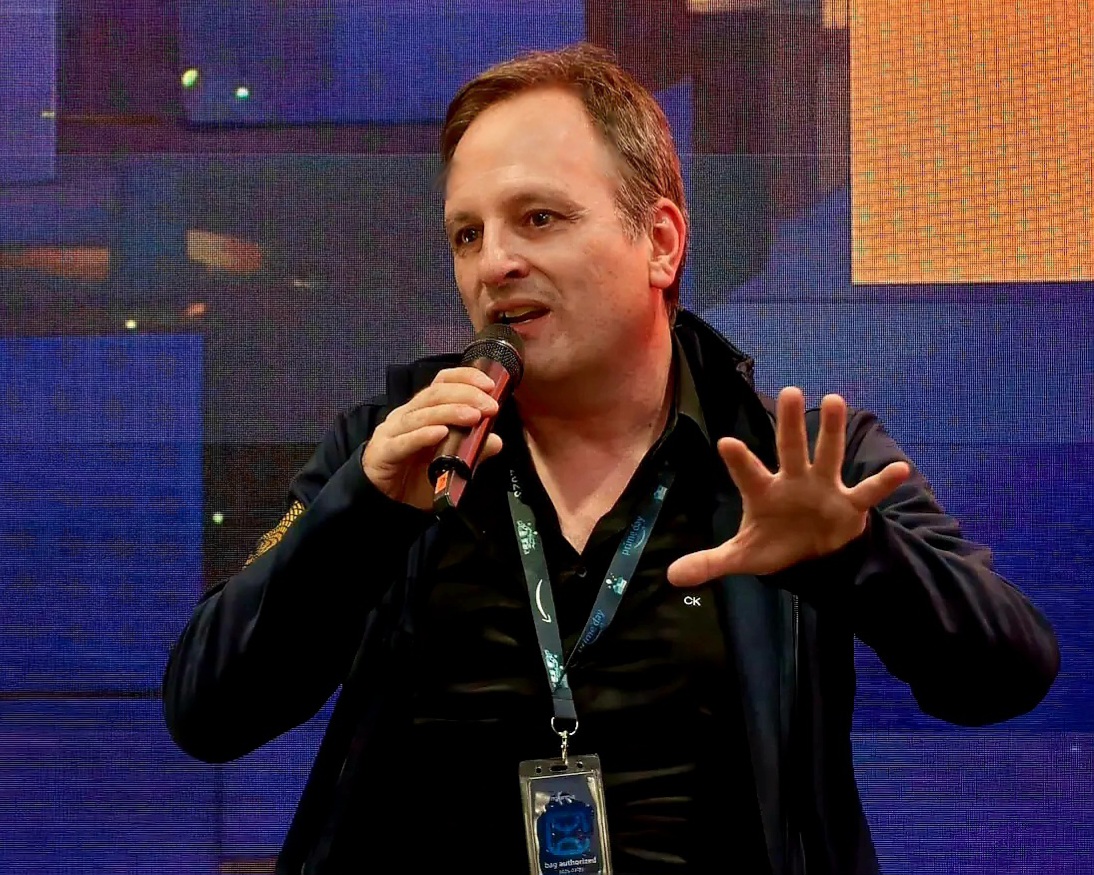
Gianpiero Negri
Physical AI Safety:
A Unified Framework for Safety, Security, and AI Assurance
The deployment of AI-enabled physical systems, from industrial robots to autonomous vehicles and intelligent infrastructure, has exposed a critical gap in current engineering practice: safety, cybersecurity, and AI assurance are still treated as separate disciplines, while the regulatory landscape (EU AI Act, Machinery Regulation, IEC 61508, IEC 62443) now demands their integration.
This keynote introduces Physical AI Safety as a system-level engineering discipline, operationalized through the ASSESS framework, six interdependent dimensions: AI and Autonomy, Safety and Ergonomics, Security, Ethics, Sustainability, and Strategy and Governance. The central argument is a fundamental shift in perspective: for AI-driven systems, safety is no longer solely about preventing failures; it is about governing behavior under uncertainty.
The presentation grounds this perspective in STAMP/STPA (Systems-Theoretic Accident Model and Processes), to expand the traditional risk assessment framework and reframe safety as a control problem and naturally captures safety-security interdependencies that traditional hazard analysis methods miss. Three concrete engineering pillars will be presented: Runtime Safety and Governance, (layered behavioral monitoring and graduated response), Safe Physical AI Agents (bounded autonomy with hard safety constraints and interpretable decision-making), and Compliance-in-Design, integrated safety engineering approach from early development through post-market surveillance, in compliance with global standards and regulations.
Drawing on real-world deployment experience at scale, the keynote offers a practical path toward coherent, system-level assurance for the next generation of autonomous systems.
Robotics Safety Center of Excellence (RS CoE)
The Robotics Safety Center of Excellence is Amazon's cross-functional technical hub for design compliance strategy and safety culture development across the Global Operations Network. Operating on four strategic pillars (Safety in Design, Safety Tools and Methodologies, Global Safety Networking, and Highest Safety Standards), the RS CoE oversees safety compliance for large-scale robotic deployments and drives Amazon's robotics and automation safety agenda globally.
Key achievements include the delivery of Amazon's first RDPI Design Risk Assessment global process, the creation of a Global Safety Forum connecting 12+ organizations and 30+ contributors, the publication of the IEC 62443 Cybersecurity Roadmap, and active participation in ISO TC299 (Robotics) and ISO/IEC JTC1 SC42 (Artificial Intelligence) international standards committees.
Speaker bio
Gianpiero Negri leads Amazon's Robotics Safety Center of Excellence, where he is responsible for design compliance strategy, AI and functional safety frameworks, and global safety governance for large-scale robotic systems. His background spans research science, industrial robotics, and functional safety leadership. Prior to his current role, he served as Principal Manager in EU R&D Robotics Safety Engineering at Amazon Robotics Advanced Technology, EU Advanced Technology Machine Safety Manager, and Global Functional Safety Manager at CNH. He holds a PhD in Applied Mathematics (Robotics AI Safety), a Post-MSc in Industrial Robotics and Functional Safety (CNR-ITIA), and an MSc in Computer Engineering (summa cum laude, Università di Salerno), and is certified in functional safety (CMSE) and AI/ML (IBM and Stanford). Gianpiero is an active contributor to international standardization, serving on ISO TC299 and ISO/IEC JTC1 SC42 committees. He has presented at leading safety and robotics conferences including the MIT STAMP/STPA Workshop (Cambridge, MA), SAFECOMP/WAISE, ICRA, IRSC, NVIDIA GTC etc.
Leonidas Kosmidis
Combining High Performance Hardware and Software with High Software Assurance: Is it Possible?
This talk will discuss the challenge of combining high performance
computing with strong assurance requirements in safety critical systems
with examples from the aerospace domain and RISC-V systems. Modern
safety critical domains like automotive, avionics and space demand
advanced functionalities such as AI, high resolution sensing, and
robotics, which significantly increase hardware and software complexity.
To meet these demands, the talk will highlight the limitations of
conventional processors used in these systems and the need to adopt high
performance technologies such as multicore processors, GPUs, and
accelerators. However, these introduce major certification challenges,
particularly under stringent functional safety standards like ISO 26262
and DO 178C, which impose strict constraints on software design and
verification.
Several strategies to reconcile performance with assurance will be
presented which have been developed and validated over several years in
EU and ESA-funded research projects in collaboration with industrial
partners. In addition, a standardisation perspective from RISC-V and
ESA/ECSS standardisation activities will be provided.
Speaker Bio
Dr. Leonidas Kosmidis is Leading Researcher at the Barcelona
Supercomputing Center (BSC) and Faculty Member at the Universitat
Politècnica de Catalunya (UPC). He is leading the HADES (HArdware
Dependability for Embedded Systems) research Group at the High
Performance Embedded Systems (HPES) Laboratory of BSC, which focuses on
high performance embedded hardware such as GPUs, Multicores and
accelerators for safety critical systems, both at hardware and system
software level.
Dr. Kosmidis is the recipient of the RISC-V Educator of the Year Award
in 2019 from the RISC-V Foundation and an Honourable Mention for the
EuroSyS Roger Needham PhD Award in 2018, which is awarded to the best
PhD thesis in Europe in the area of Systems. He has been the Principal
Investigator of several projects funded by the European Space Agency
(ESA) such as the GPU4S (GPU for Space), "Formal Methods for GPUs", and
the Horizon Europe METASAT project funded by the European Commission, as
well as projects funded by industry such as the Airbus Defence and
Space, which focus on the adoption of GPUs in space and avionics
systems, including their certification. He is also participating in
several standardisation efforts regarding GPU programming in safety
critical systems within Khronos, in Vulkan SC and SYCL SC, as well as an
external expert for the revision of the ECSS standards ECSS-E-ST-20-40
and ECSS-Q-ST-60-02C on ASIC, FPGA and IP Core developments, the
development of the ADHA specification and the use of hardware
autocoding. He is also involved in RISC-V standardization, in which he
serves as Vice-Chair of the RVM TG, and participates in several safety
critical SIGs and TGs such as the Space SIG, PQC, Crypto and others.